
Why Your Google Search Console Impressions Are About to Drop (And What It Actually Means)
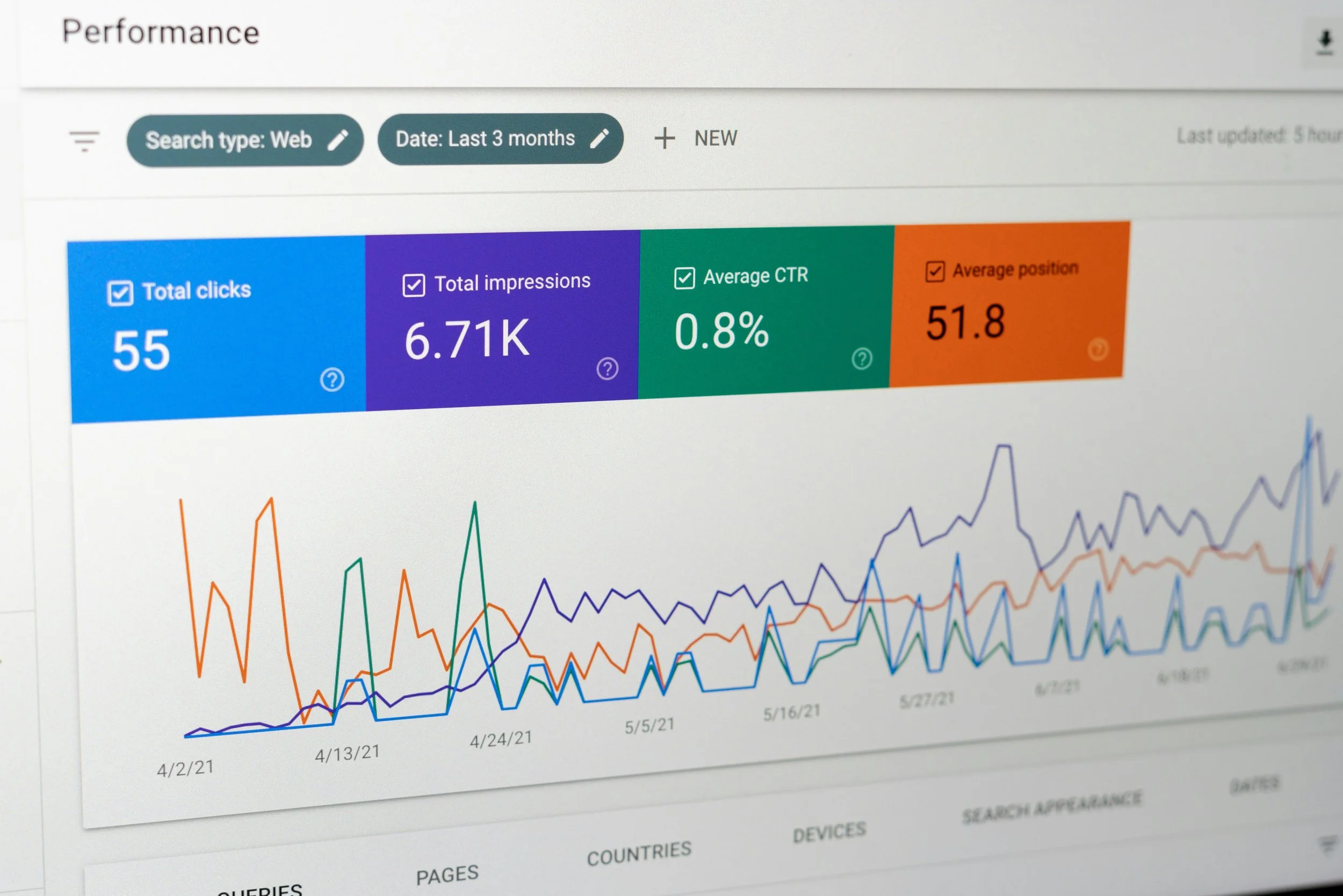
If you have logged into Google Search Console recently and noticed your impressions dropping, or if someone has warned you they are about to; this article explains exactly what is happening and why you do not need to panic.
Your SEO is almost certainly fine. The data was the problem.
What Actually Happened
On 3 April 2026, Google updated its official Data Anomalies page with a confirmation that will have made a lot of marketing managers do a double take.
A logging error in Google Search Console has been over-reporting impressions since 13 May 2025. That is nearly eleven months of inflated data sitting quietly in the most widely used organic search reporting tool in the world.
Google's official statement reads: a logging error is preventing Search Console from accurately reporting impressions from May 13, 2025 onward. The fix is rolling out over the next few weeks, and as a result, impression numbers will decrease in the Performance report.
Clicks and other metrics were not affected.
That last sentence is the most important one in this entire article, and I will come back to it.
Key fact: Clicks, traffic and conversions were not affected by this error. If your SEO was working before May 2025, it is still working now. What is changing is the accuracy of how one metric was being recorded — not your actual performance in search.
Which Metrics Were Actually Affected
This is where it gets slightly more nuanced, and it is worth understanding properly before you report to anyone.
Impressions were directly affected by the logging error. But because CTR (click-through rate) and average position are both calculated using impressions, those figures have also been off — even though Google's statement says clicks and other metrics were unaffected. Technically that is true. Practically, any metric derived from impressions needs to be treated with caution for the affected period.
Here is a simple breakdown:
| Metric | Affected? |
|---|---|
| Impressions | Yes — over-reported since May 2025 |
| CTR (click-through rate) | Indirectly — calculated using impressions |
| Average position | Indirectly — affected by how impressions were logged |
| Clicks | No |
| Organic traffic (sessions) | No |
| Conversions | No |
| Rankings | No |
If your clicks held steady while your impressions were rising through 2025, that was not your SEO failing. It was a data error making the gap look bigger than it was.
What the Alligator Graph Was Really Telling You
If you have been in SEO circles for the past year, you may have come across the term "alligator graph." It describes a pattern that appeared across a huge number of Search Console accounts from mid-2025 onwards: impressions climbing steadily while clicks stayed flat, creating a chart that looks like an open alligator's mouth.
The widely accepted explanation at the time was AI Overviews — Google's AI-generated summaries at the top of search results, which give users an answer without needing to click through. The theory was that impressions were rising because content was being seen, but clicks were dropping because the AI Overview was answering the question instead.
That explanation is not wrong. AI Overviews do have a real impact on click behaviour.
But some of what looked like a decoupling of impressions and clicks was simply this logging error. We do not know the exact split and Google has not offered a breakdown. What we do know is that any impression trend analysis spanning the period from May 2025 onwards should be treated with caution, because it contains at least one significant data discontinuity.
If you have been worried about your content underperforming based on that pattern, it is worth revisiting those conclusions with fresh eyes once the corrected data settles.
What to Do Right Now
This is the practical bit. If you manage Search Console for your own business or for clients, here is what I would do:
1. Annotate your Search Console data
Mark 13 May 2025 as a data discontinuity point in your reporting. If you are using a dashboard tool like Looker Studio or any third-party SEO platform, add an annotation so anyone reviewing the data knows they are looking across a boundary. The last thing you want is someone pulling a year-on-year impression comparison in six months and drawing the wrong conclusions.
2. Do not compare impression data across this period
Any comparison that spans before and after May 2025 is not like-for-like. Year-on-year impression reports that overlap this period are unreliable. Pause those comparisons until the fix has fully propagated and you have a clean baseline to work from.
3. Export your historical data now
Before the fix fully rolls out, export your Search Console data so you have a record of what was being reported. You can do this via the export function in the Performance report, or through the Search Console API if you need larger datasets. Having the pre-fix data saved means you can compare before and after when the correction is complete.
4. Get ahead of the conversation if you report to clients or stakeholders
This one matters. If someone in your business or one of your clients monitors Search Console impressions as a measure of SEO performance, send a heads-up now — before the numbers drop and they come to you asking what went wrong. A short message along the lines of "Google has confirmed a data error in Search Console that has been over-reporting impressions since May 2025. The fix is rolling out now, so impression numbers will look lower. Clicks and actual traffic are unaffected, and this is confirmed by Google directly" — that is a far easier conversation than explaining a drop after it has happened.
5. Recalibrate what you are measuring
More on this in the next section, but start moving your primary SEO metric away from impressions and towards clicks, sessions and conversions. Now is as good a time as any.
This Is Also a Good Moment to Rethink Impressions as a Metric
I want to say something that I think is worth sitting with, not just as a response to this particular bug, but as a broader principle for how we report on SEO.
Impressions were never the most meaningful measure of whether your SEO is working.
An impression means your URL appeared somewhere on a search results page. That is it. It does not mean anyone saw it, read it, scrolled to it, or had any interest in clicking. It is one of the noisiest signals in search, which is partly why this error went unnoticed for eleven months in the first place.
In my work with clients across hospitality, lifestyle and B2B, I have seen impressions used as a headline metric in monthly reports for years. They look impressive on a chart. They are easy to point to. But they do not tell you whether the SEO is actually moving the business forward.
Clicks tell you that a real person made a decision to visit your site. Sessions tell you they arrived. Time on page tells you they stayed. Conversions tell you they did something that matters.
Those are the numbers to build your reporting around. Those are what should go in the executive summary or the client update. And importantly, those are the metrics that this error did not touch.
Your impression count is about to get smaller. It will also be more accurate. That is not bad news, it is just a better version of the data you were already working with.
What to Say If You Work With an SEO Agency or Freelancer
If you are a marketing manager who reports to a director, a board, or a business owner who pays attention to the monthly SEO numbers, here is some simple language you can use to get ahead of this:
"Google has confirmed a logging error in Search Console that has been over-reporting impressions since May 2025. The fix is being rolled out now, so our impression numbers will decrease over the next few weeks. This does not reflect a change in our actual search performance — Google has confirmed that clicks and traffic data were not affected. I wanted to flag it before the numbers changed so there are no surprises."
That is all you need. Clear, calm, factual, and it shows you are on top of it.
The Bigger Picture
What this episode highlights, more than anything else, is the importance of not building your marketing strategy around a single data source.
Search Console is a genuinely useful tool. I use it with clients regularly and it gives us a clear picture of how content is performing in search. But it is one lens, not the whole view. Cross-referencing with Google Analytics 4, tracking actual traffic trends, monitoring lead and enquiry volumes alongside rankings; that is what gives you a picture you can actually trust and make decisions from.
If your clicks are healthy, your traffic is consistent, and your enquiries are coming in, your SEO is working. Do not let a metric correction tell you otherwise.
A Final Note
If you are unsure what this means for your specific Search Console account, or you want a second opinion on how to interpret your SEO data going forward, I am happy to take a look. You can find out more about how I work with businesses on analytics and reporting at ninety8media.co.uk/analytics-reporting, or get in touch directly via the contact page.
The impressions drop is coming. Now you know why — and what to do about it.
