
Three of this week's biggest updates landed within four days of each other, and together they show AI becoming the place customers discover businesses and, increasingly, the place they buy from them. OpenAI opened up business profiles in ChatGPT on 10 November. Google started a core update the same day and moved Search onto a new AI model two days later, and by Friday ChatGPT could complete purchases on a user's behalf. Below, we've broken down each update, what it means for small and founder-led businesses in the UK, and what we'd do about it.
You can now claim your business in ChatGPT
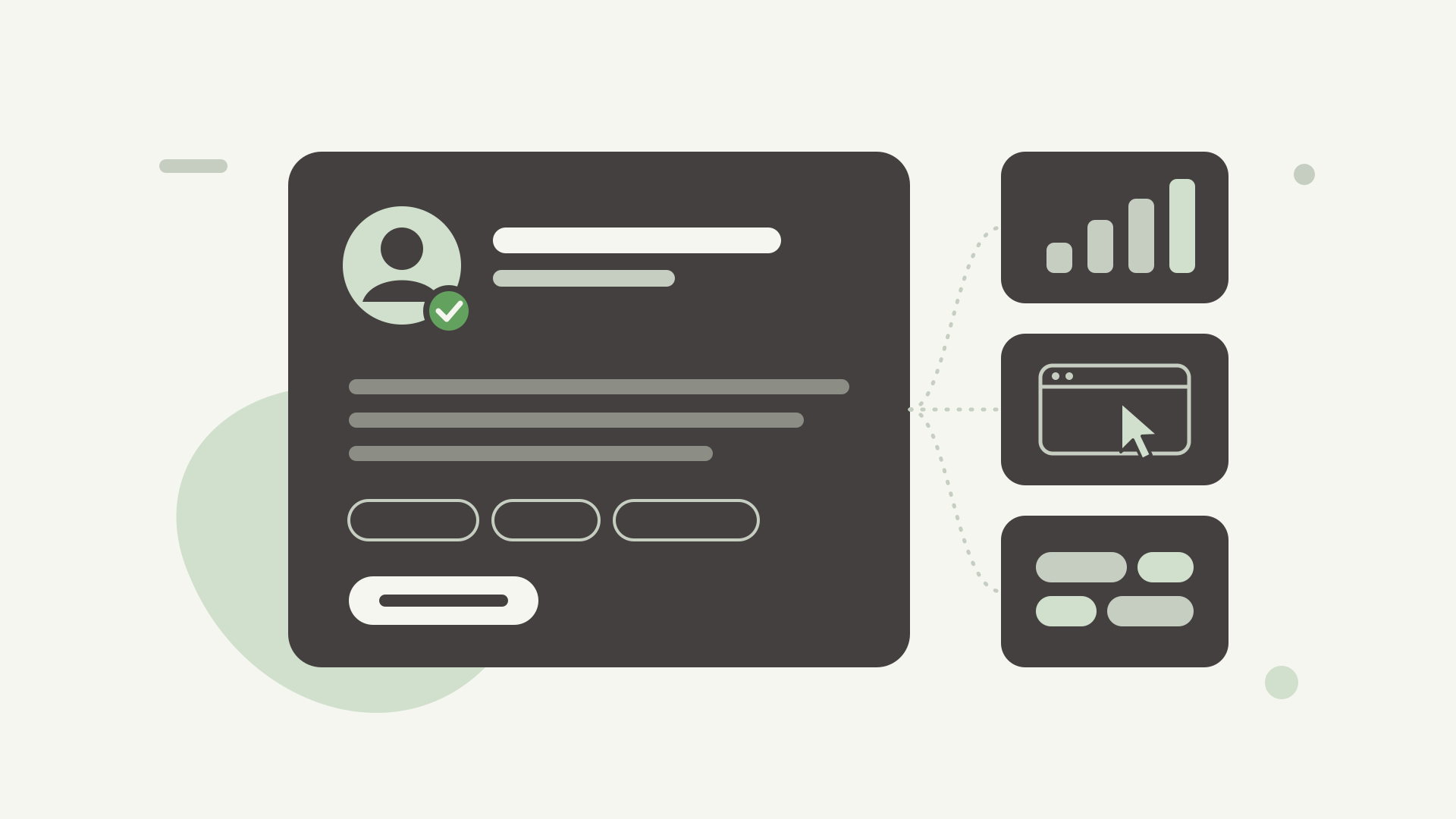
OpenAI launched Businesses in ChatGPT in beta on 10 November. Through a new Business Hub, owners can claim and verify their profile, correct the information ChatGPT holds about them and connect product feeds. They can also see aggregated data on how often they're mentioned, how many people click through to their website and which topics they appear for. OpenAI says any eligible business in a country where ChatGPT is available can claim a profile, so UK businesses aren't shut out.
There are limits for now. According to OpenAI's setup guidance, local shops and restaurants can currently only claim existing US listings. Business Agents, the branded chat assistants that answer customer questions, are limited to eligible US e-commerce and online service businesses. Be clear about what claiming does, too. OpenAI states that it doesn't guarantee higher placement or sales, and ChatGPT's recommendations stay independent.
What you do get is control over your facts and a direct view of how ChatGPT talks about you, straight from the source. If you're eligible, claim your profile now and record your starting mention and click figures before changing anything, so you have a baseline to measure against.
Google's November core update is rolling out
Google began rolling out its November 2026 core update on 10 November. It covers every language worldwide, and Google says it can take up to two weeks to complete. Google calls it a regular update aimed at surfacing relevant, satisfying content from all kinds of sites, and as usual it hasn't said what's being targeted. It's the third core update of 2026, after March and May.
If your rankings or traffic move over the next fortnight, hold off on rewriting pages or making technical changes. Changes made mid-rollout make it almost impossible to tell whether a drop or gain came from Google or from you. Mark 10 November in your reporting, watch Search Console by page and query, and act only once the rollout has finished and the movement has held.
Gemini 4 Hydrogen is now powering Google Search
Two days after the core update started, Google made Gemini 4 Hydrogen available in Search worldwide, describing it as the biggest model upgrade to Search yet. Google says the model is better at understanding complex, multi-part and very specific questions. It also runs a wider set of related searches behind the scenes, which Google calls query fan-out, and produces more visual answers and comparisons.
This is likely to change which pages get pulled into AI answers for detailed questions. Someone searching for a dog-friendly pub in Oxford with a garden that takes Sunday bookings for eight is asking several questions at once, and Search is now better at answering all of them together. Pages that cover the details customers actually ask about, such as price, location, facilities, suitability and availability, are better placed to be surfaced.
Hydrogen and the core update arrived in the same week, so it'll be hard to know which one is behind any change you see. That's another reason to wait until both have settled before drawing conclusions.
ChatGPT Wallet lets AI agents pay for purchases
OpenAI introduced ChatGPT Wallet on 13 November, giving its AI agents a way to complete purchases for users. Customers add a card, and every purchase has to be approved with a biometric check such as Face ID. The agent and the merchant never see the actual card details, because payments run on tokens built with American Express, Mastercard and Visa.
For now it's limited to a small number of US ChatGPT Pro subscribers, so UK businesses don't need to do anything urgent. It does show where things are heading. OpenAI's guidance for businesses focuses on making product data accessible and making sure fraud systems don't decline genuine purchases made by agents.
For UK ecommerce brands, the sensible move is to keep product feeds, stock levels and policies accurate, and to keep checkout simple and accessible. You shouldn't weaken your security to accommodate agents.
ChatGPT Ads switches to Target CPA and Target CPC
From 9 November, new ChatGPT Ads campaigns use Target CPA for conversion campaigns and Target CPC for click campaigns, replacing the old Max Bid and Max CPC controls. Existing campaigns can keep running on maximum bids for now, but those controls retire on 1 January 2027.
The detail that matters is how targets work. OpenAI describes them as average cost goals, so the system can bid above or below your target in individual auctions and your actual costs may come in higher or lower. Anyone who has used Target CPA in Google Ads will recognise the model, and it means ChatGPT advertising now leans heavily on accurate conversion tracking.
If you're considering ChatGPT ads in future, get your conversion tracking right and set realistic cost targets before you commit any budget.
Google makes AI Max clicks easier to spot
Google has documented a ValueTrack parameter, {search_term_matchtype}, that shows whether a click came through your own keywords or through an AI Max expansion. Used alongside existing parameters such as {matchtype} and {keyword}, it lets you separate standard keyword traffic, AI Max broad expansions and keywordless AI Max matches in your analytics.
An AI Max broad expansion previously returned the same values as a normal keyword click, so the extra traffic was hard to isolate. That made it difficult to judge whether those clicks were bringing in good leads or just spending budget.
If you're running AI Max, check your tracking template before adding the parameter so nothing already in place breaks. Then report AI Max traffic separately, so you can compare its conversion quality with your core keywords.
Klaviyo's Discount Affinity separates deal seekers from full-price buyers
Klaviyo has introduced Discount Affinity, which looks at a customer's purchase history and groups them as a deal seeker, a mixed buyer or a full-price buyer. You can use those groups in segments and flows, so customers who usually pay full price don't get the same discount as people who only buy on offer. It's currently in preview for selected Personalization accounts.
For ecommerce, hospitality and lifestyle brands, this is a practical way to protect margin heading into Black Friday. We'd treat each group as a signal to test against and keep a control group in place. Try offering full-price buyers something like early access while deal seekers get the discount, and see which approach earns more per customer.
Meta tests AI product videos with Dream Render
Meta is testing Dream Render, an AI web app that turns product photos or written descriptions into draft videos. Users can adjust shots, framing, pacing, voiceover and on-screen text before downloading, and Meta says published videos will carry an AI-generated label. It's only available in a small number of Asian markets at the moment, so for UK businesses it's one to watch.
Tools like this will make product video quicker and cheaper to produce, which matters for small brands without a production budget. They still need a human check, because AI video can get product details, pronunciation and tone wrong. The disclosure label also means your audience will know how the video was made.
What we'd prioritise this week
If you do one thing, check whether you can claim your business in ChatGPT and record your starting data. Claiming is free, and it gives you a direct view of how one of the most widely used AI assistants represents you.
Beyond that, keep a steady hand on your SEO while the core update and Hydrogen settle. If you sell online, make sure your product information, stock and policies are accurate everywhere they appear, because that's increasingly what AI assistants read when they recommend or buy from you.
If you'd like help working out what any of this means for your business, get in touch and we'll talk it through.
