
Oxford Surveying Services - Case Studies, Website and LinkedIn
Turning a quantity surveyor's project data into case studies, a search-optimised website section and LinkedIn content that show developers and contractors exactly what a QS is worth.
Oxford Surveying Services (OSS) is a quantity surveying firm working with developers, building contractors and sub-contractors across Oxfordshire and beyond. They're exceptional with numbers, costing and contracts. What they didn't have was a way to turn years of project results into marketing that other people would find, read and act on.
OSS instructed Ninety8 Media to take raw project data from their workbook and build it into a full case study series: designed PDFs, a dedicated case studies section on their website, and LinkedIn content for every project.
The Challenge
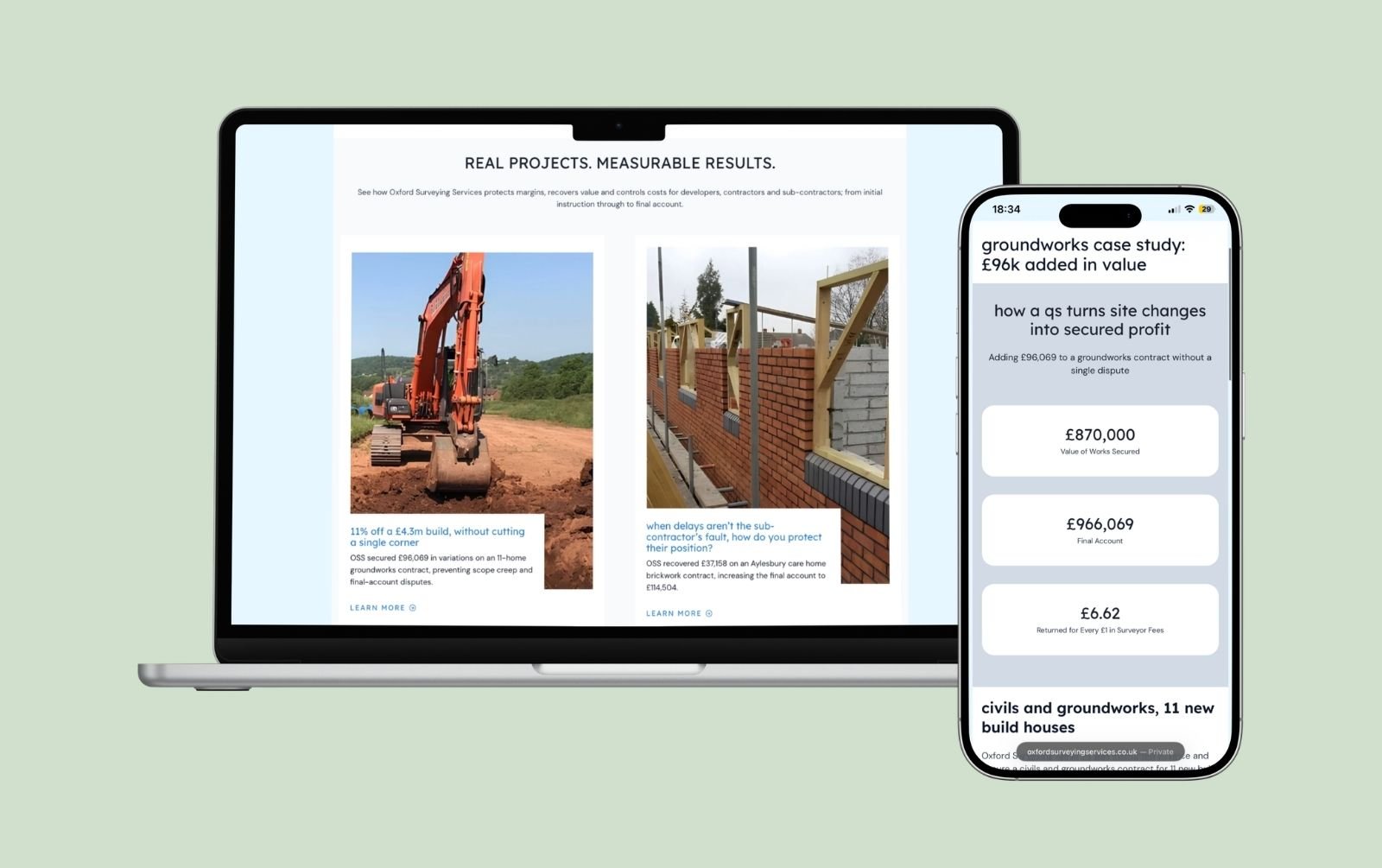
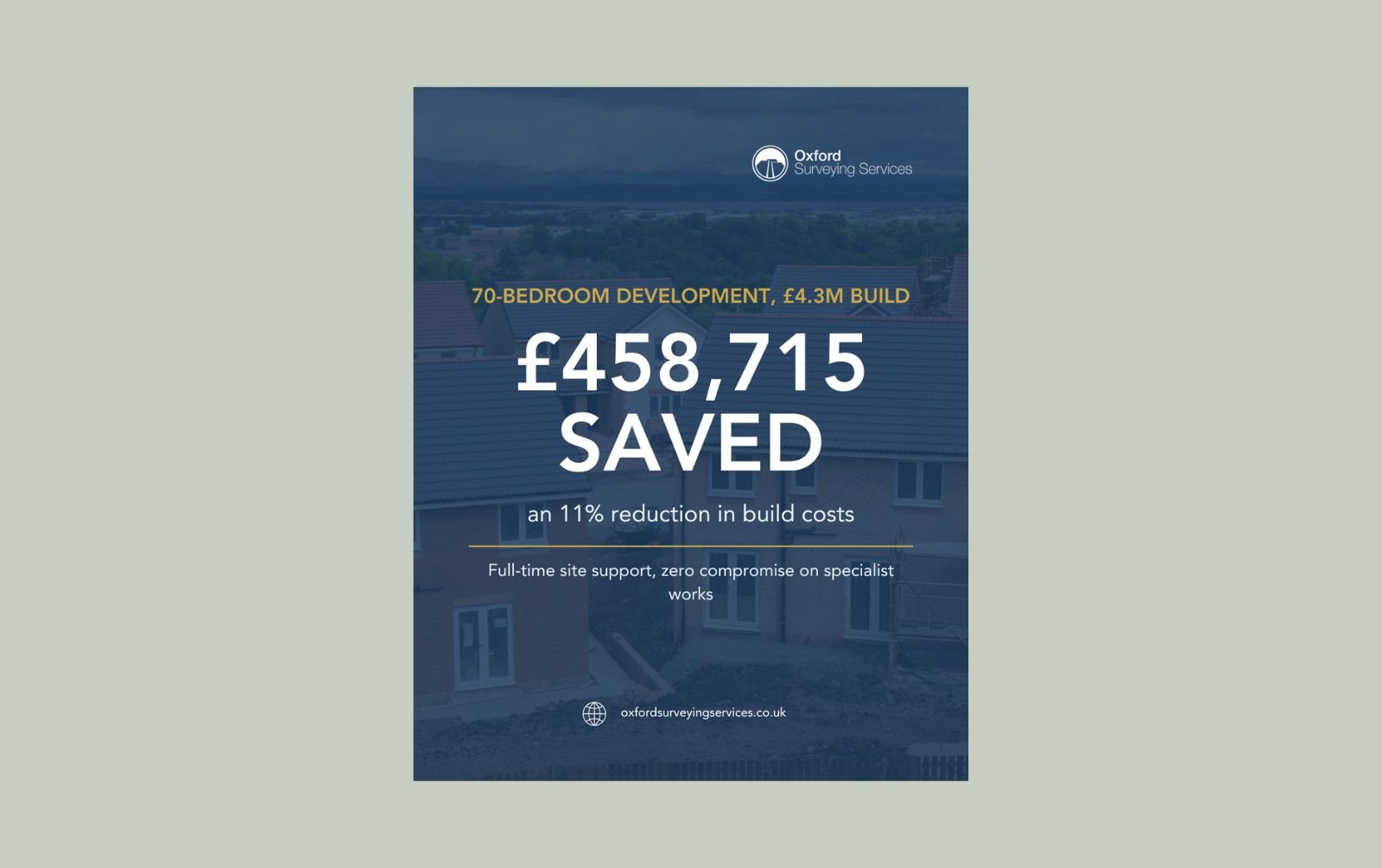
The results were already there. On one project, OSS's work secured £96,069 of additional value on a groundworks contract, returning £6.62 for every £1 in fees. On another, their involvement saved £458,715 on a £4.3m residential build. The problem was that these numbers lived in spreadsheets, not in front of the developers and contractors who needed to see them.
The website had one existing case study, but it had no supporting imagery, no search optimisation and nowhere obvious to sit. There was no case studies section for new projects to go into, and nothing telling Google what any of it was about.
OSS's case study template was built around three stat boxes framed entirely around budget savings. That works when a project is a savings story. Most of their projects weren't. Some were about protecting value through variations, others about defending a sub-contractor's position when delays weren't their fault. Forcing those into a savings layout would have meant either dropping the strongest number or misrepresenting what happened on site.
Then there was voice. Quantity surveying is a formal industry. OSS works at Director level, under formal instruction, and their audience notices when terminology is loose. Copy that simplified "labour, plant and material costs" or talked about a QS being "brought in" would cost them credibility with exactly the people they wanted to reach.
Our Approach
A format that flexes to the story
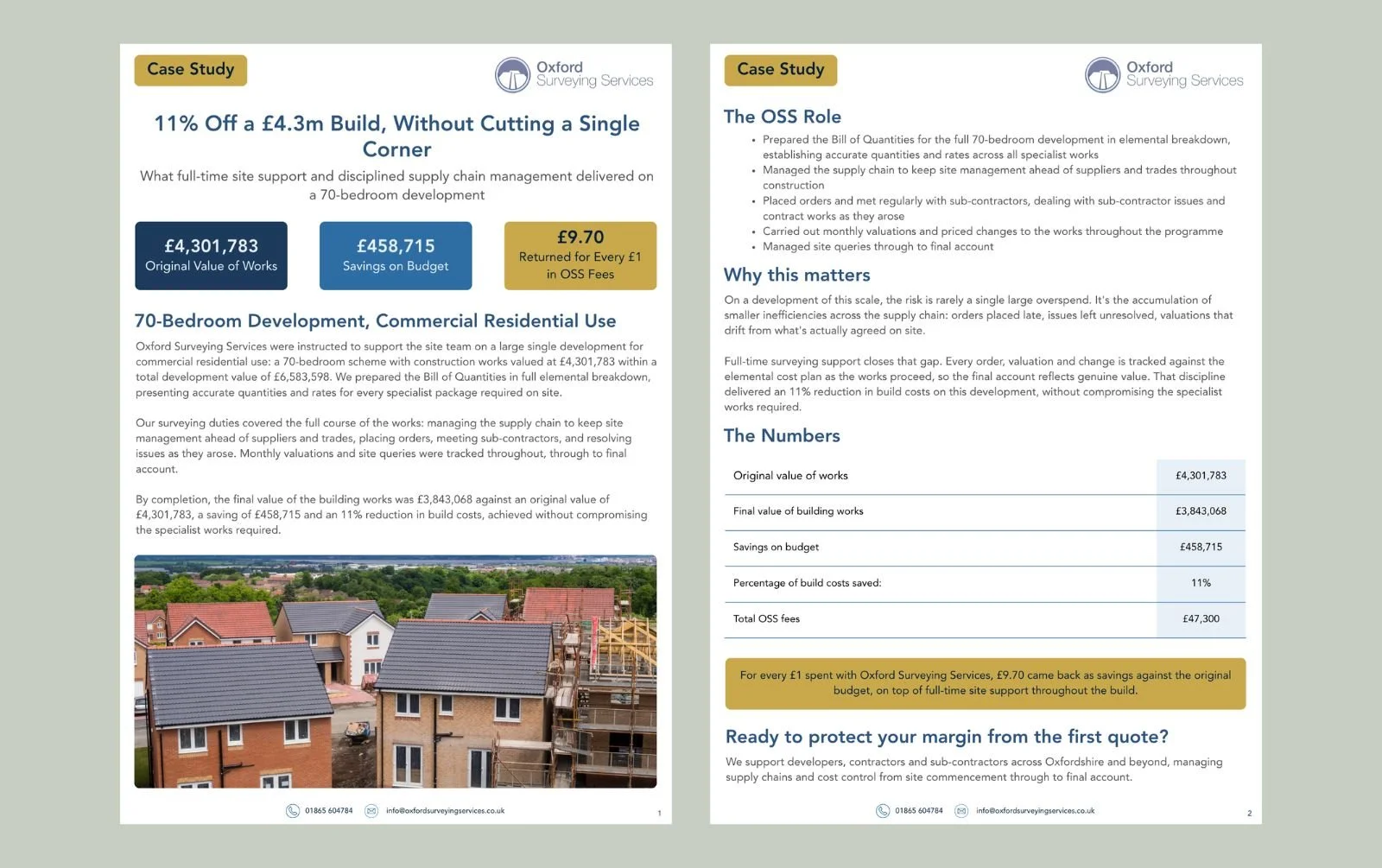
We replaced the savings-only template with a single case study structure where the three headline stats change depending on what each project actually proved. A savings story shows original budget, savings and fee percentage. A value-growth story shows value secured, final account and fee return. Every case study reads as part of the same series, without bending the facts to fit a layout.
We also gave OSS a standard data intake list and a reusable brief, so every new case study starts from the same information: original value, final account, total fees, what changed on site, and what OSS did about it.
Writing in the language of the industry
Early in the project, OSS's Director gave us detailed feedback on how the construction sector talks about itself. We rewrote the copy to match. Consultants are instructed, not engaged. Technical terms like JCT contracts, Extension of Time, Architect's Instructions and quantities and rates stay precise. The copy reads as though it came from someone who understands a final account, because that's who the audience is.
Headlines that earn the read
Accurate isn't the same as interesting, so each case study was given a hook built around its sharpest point:
How a QS Turns Site Changes Into Secured Profit
11% Off a £4.3m Build, Without Cutting a Single Corner
The Contractor Had Never Run a JCT Contract Before. Here's What Protected Them.
The Delays Weren't the Sub-Contractor's Fault. Here's How We Protected Their Position.
The Case Study Documents
Every project needed a document OSS could send to a prospective client, attach to a tender or hand over in a meeting. We produced a designed PDF for each new case study, built in OSS's existing Canva template so the series sits alongside their other materials.
Rather than dropping new copy into old boxes, we rebuilt the template around the new format. Each document follows the same order: the hook headline, three stat boxes chosen for that project's story, a short project overview, OSS's role on that specific job, a full numbers table for readers who want the detail, and a single pull-quote figure calculated exactly from that project's data.
The PDF copy was condensed field by field so each section fits its space without losing the technical detail a developer or main contractor would look for. Every cover uses OSS's own site photography from that project, so each document shows the actual build rather than a stock image of a hard hat.
The call to action changes depending on who each case study speaks to. BOQ-led projects close on getting the pricing right from the outset. Sub-contract projects close on protecting margin and cash flow from instruction through to final account, because a sub-contractor squeezed by someone else's delays doesn't control the original quote.
We replaced the savings-only template with a single case study structure where the three headline stats change depending on what each project actually proved. A savings story shows original budget, savings and fee percentage. A value-growth story shows value secured, final account and fee return. Every case study reads as part of the same series, without bending the facts to fit a layout.
We also gave OSS a standard data intake list and a reusable brief, so every new case study starts from the same information: original value, final account, total fees, what changed on site, and what OSS did about it.
The Website Case Studies Section
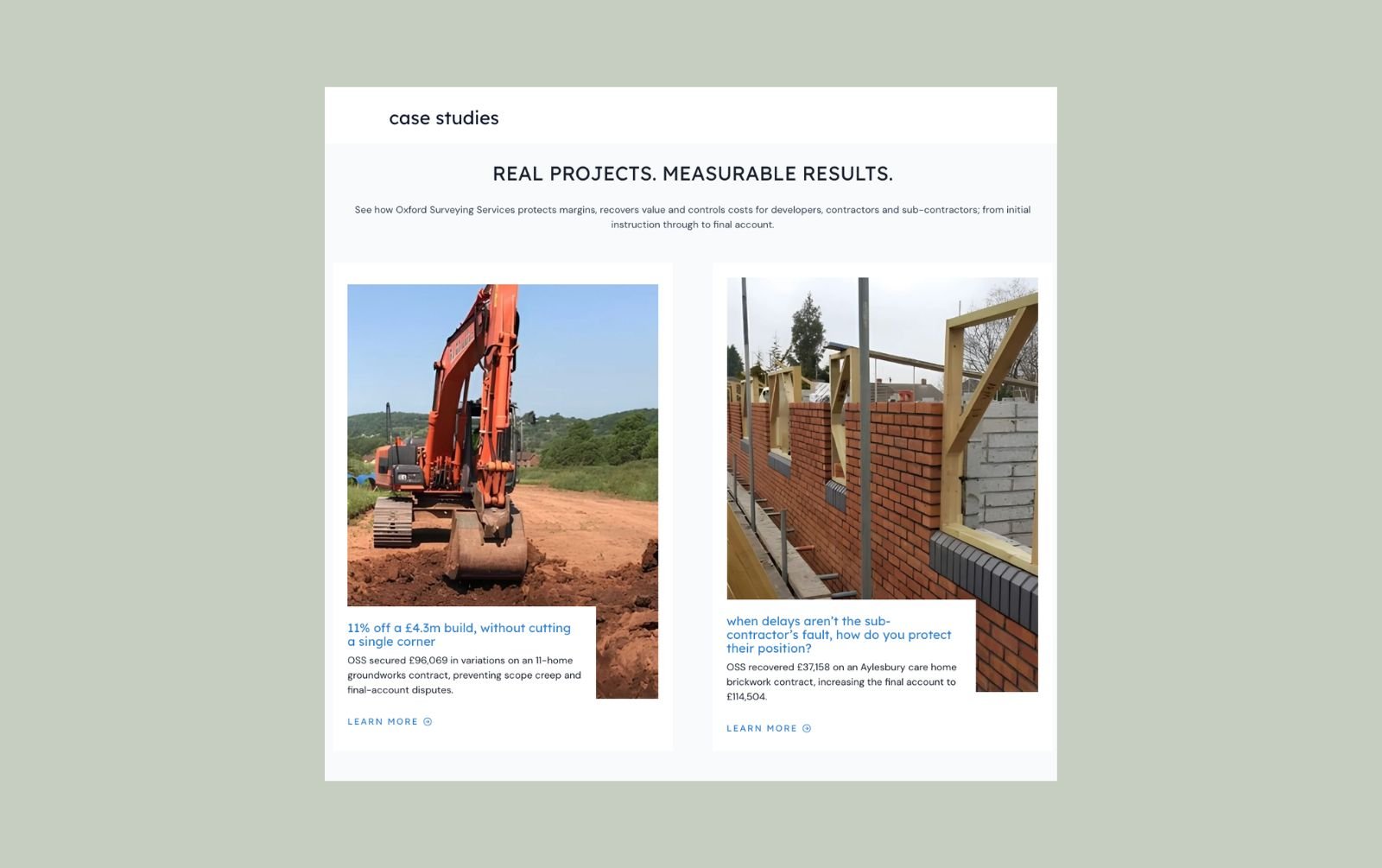
Case studies only generate enquiries if people can find them. We built a dedicated case studies section on the OSS WordPress website, with a hub page bringing the series together and an individual page for every project.
We also reworked the website header menu so the case studies area has a clear place in the navigation. Visitors no longer need to go looking for proof of OSS's work, it's one click from anywhere on the site.
Each case study page carries its own web-specific copy, project photography, meta title and meta description. We installed and configured Yoast SEO and optimised every page for search, so each case study can be found by the searches OSS's clients actually make, rather than sitting on the site unlabelled.
The existing case study was brought into the new section and rewritten from scratch, given a visual and optimised to the same standard, so all five read as one consistent series.
"I appreciate all your work, the site looks good with the case studies."
Danny Rose, Director, Oxford Surveying Services
The LinkedIn Content
Each case study was turned into a series of LinkedIn posts written for how people actually read the feed. Rather than opening with a list of figures, the posts open with a question or observation that gives the reader a reason to keep going, then land the number once they care about it.
For the graphics, we designed a hero-stat system: one oversized figure with its unit sitting right beside it, so every graphic reads as a complete statement even if someone never opens the caption. The same system runs across all four new case studies, giving OSS a recognisable look in the feed.
What We Delivered
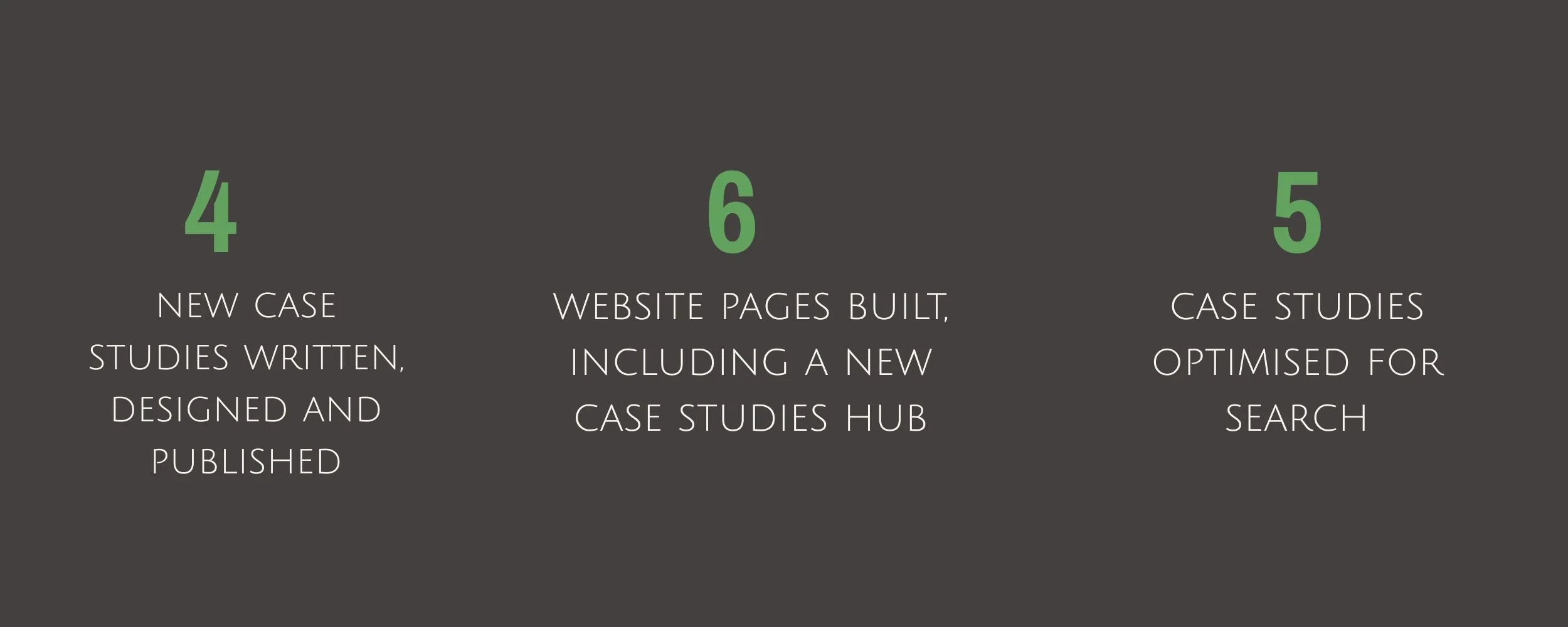
Four new case studies written from raw project data, with every figure checked and reconciled before publication
Four designed PDF case study documents using OSS's own project photography
A dedicated case studies section on the OSS WordPress website, with a hub page and individual pages for each project
An improved header menu giving the case studies area a clear place in the site navigation
Yoast SEO installed and configured, with meta titles and descriptions for every case study page
The existing case study rewritten, given a visual and optimised to match the new series
A series of LinkedIn posts with designed graphics for every new case study
A reusable case study format, data intake list and brief for future projects
The Outcome
OSS now has five case studies live on their website, brought together in a dedicated hub that's easy to reach from the main menu. Each has its own optimised page, alongside PDFs for client conversations and LinkedIn content to put the results in front of the people who instruct them. Every new project from here goes through the same system.
"This is very good work, thank you and these look great."
Danny Rose, Director, Oxford Surveying Services